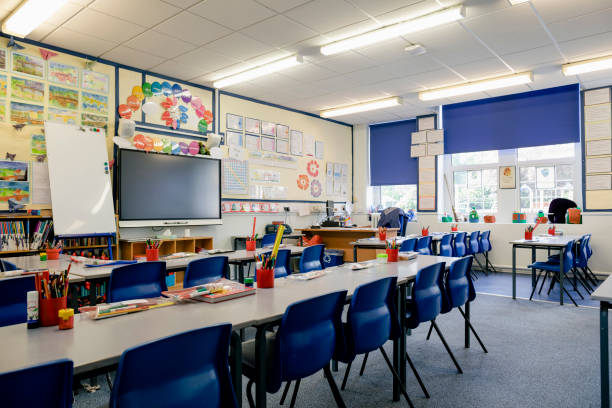
There is a significant shift underway in the Indian educational system toward a digital framework. Given the role that technology plays in education and pedagogy, digital classroom technologies in India are changing the ways students learn, communicate, participate, and develop. By the year 2025, nearly all educational entities, primary and secondary alike, are implementing digital technologies that facilitate active learning through classroom engagement, enhance teaching productivity, and offer individualized learning.
With digital tools such as smart electronics, to repository digital educational resources, to artificial intelligence grading and assessment tools, and to augment simulations in a classroom, educational technology is helping to construct an interactive, individualized educational system.
This SEO-optimized article illustrates how digital India classroom tools are the best in the industry and outlines the benefits, features, and future construction of education in India.
What Are Digital Classroom Tools?
Digital classroom tools refer to software, hardware, apps, platforms, and technologies used to support teaching and learning. They include:
- Smart boards
- Online learning platforms
- Classroom management apps
- AI-based analytics systems
- Digital content libraries
- Virtual labs and simulations
- Assessment tools
- Communication and collaboration apps
These tools make learning interactive, accessible, and engaging for students across India.
Why Digital Classroom Tools Are Growing in India
Several factors are driving the massive adoption of digital tools in Indian schools and colleges:
1. NEP 2020 Implementation
The National Education Policy emphasizes digital learning, blended classrooms, and skill-based education.
2. Post-Pandemic Digital Literacy
Students and teachers are now comfortable with online tools, making digital classrooms easier to adopt.
3. Affordable Technology
Lower-cost devices, smart boards, and internet access have enabled institutions in tier-2 and tier-3 cities to go digital.
4. AI and EdTech Expansion
India’s booming edtech industry is supplying schools and colleges with cutting-edge classroom tools.
5. Personalized Learning Demand
Parents and educators prefer tools that offer customized learning paths for students.
Top Digital Classroom Tools in India for Schools and Colleges (2025)
Here are the leading tools transforming digital learning across the country:
1. Google Classroom
One of the most widely used platforms in India, Google Classroom helps teachers:
- Create and share assignments
- Conduct quizzes and assessments
- Communicate with students
- Track performance
It is free, easy to use, and integrates seamlessly with Google Workspace (Docs, Slides, Drive, Meet).
2. Microsoft Teams for Education
Popular in schools and colleges, MS Teams offers:
- Virtual classrooms
- Lecture scheduling
- Assignment management
- Integrated OneNote notebooks
- Secure communication
Colleges especially use Teams for hybrid learning and online lectures.
3. BYJU’S Classroom Tools
BYJU’S provides digital content libraries, smart class modules, and AI-powered assessments tailored for K–12 schools.
Key features:
- Animated video lessons
- Concept clarity tools
- Personalized quizzes
- Analytics dashboards
4. Teachmint
A leading Indian digital classroom platform offering:
- Live classes
- Class recording
- Attendance tracking
- Fee management
- Parent communication tools
Teachmint is especially popular in private schools due to its all-in-one features.
5. TCS iON Digital Classroom
Used by many colleges and universities, TCS iON provides:
- Digital lectures
- Proctored online exams
- Cloud-based learning
- Skill development modules
It focuses strongly on higher education and vocational training.
6. Smart Boards and Interactive Displays
Brands like BenQ, Samsung, ViewSonic, and Promethean offer classroom smart boards that allow:
- Touch-based learning
- Multimedia lessons
- Interactive quizzes
- Teacher presentations
These tools enhance visual learning for school students.
7. Virtual Labs (Government of India Initiative)
Colleges and universities use virtual labs for:
- Physics
- Chemistry
- Biology
- Engineering
- Computer science
Students can perform labs remotely, improving practical skills.
8. Learning Management Systems (LMS)
Many colleges use LMS platforms like:
- Moodle
- Blackboard
- Canvas
- Schoology
Features include course creation, tests, grades, and digital resource sharing.
9. AI-Based Assessment Tools
Tools such as Embibe, Mettl, and Oliveboard help institutions conduct:
- Adaptive assessments
- Mock exams
- Proctored tests
- Skill evaluations
They use analytics to measure student performance accurately.
10. EdTech Apps for Skill Development
For colleges, platforms like Coursera, UpGrad, Unacademy, and Skillshare offer:
- Industry skills
- Certification courses
- Job-oriented training
These tools prepare students for modern careers.
Benefits of Digital Classroom Tools for Schools and Colleges
1. Better Engagement and Learning Outcomes
Interactive videos, animations, and simulations make learning more enjoyable.
2. Personalized Learning Experiences
AI-based tools adapt to each student’s:
- Learning pace
- Strengths
- Weaknesses
3. Improved Teacher Efficiency
Digital tools automate:
- Grading
- Attendance
- Assignment distribution
This saves teachers valuable time.
4. Real-Time Assessment and Analytics
Teachers can track:
- Student progress
- Topic-wise performance
- Attendance trends
This helps identify learning gaps early.
5. Hybrid and Remote Learning Support
Schools and colleges can easily switch between:
- In-person classes
- Online classes
- Blended learning models
6. Access to Quality Learning Resources
Digital libraries and smart boards provide:
- Updated syllabus content
- HD video lessons
- E-books
- Practice question banks
7. Better Collaboration
Apps like MS Teams and Google Classroom allow students to work on:
- Group assignments
- Projects
- Interactive discussions
Future of Digital Classroom Tools in India (2025 and Beyond)
The future of education in India is deeply tied to technology. Key trends include:
1. AI and Adaptive Learning in Every Classroom
Tools will personalize content for each individual student.
2. Virtual Reality (VR) and Augmented Reality (AR) Learning
Imagine medical students practicing surgery or school children exploring the solar system in 3D.
3. Paperless Classrooms
Assignments, tests, notes, and reports will be fully digital.
4. Blockchain for Secure Academic Records
Colleges will adopt blockchain-based certificates and transcripts.
5. IoT-Enabled Smart Campuses
Connected devices will automate attendance, security, and classroom operations.
Conclusion
The introduction of educational technology in Indian schools and colleges digital classroom tools signifies a turning point in toward a postmodern interaction and skills-based pedagogy. These tools are improving educational experiences, outcomes and institutional future readiness while alleviating some workload of teaching staff. Educational tools are digital classrooms are becoming indispensable to schools and colleges aiming to offer quality, future-ready educational pedagogy leading to a postmodern, digital education tools revolution in India in 2025.
Digital education tools for the classroom, like smart boards, AI-powered platforms, virtual laboratories, and classroom management software are tailored to help India’s future students. The future is innovative.